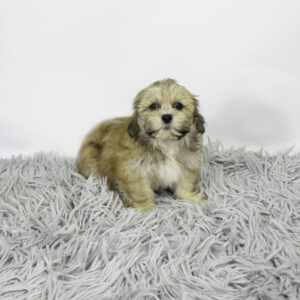


Small breed
Lhasa Apso Puppies
Loving companion with a delightful personality
- Adult weight 12–18 lbs
- Height 10–11 in
- Lifespan 12–14 years
- Exercise 30 min a day
 1 available now
Available Lhasa Apso Puppies
About the Lhasa Apso
The Lhasa Apso is a small but mighty dog with a rich history that traces back to the ancient palaces of Tibet. Originally bred as sentinels for monasteries, these loyal companions are well-equipped to bond deeply with their families, bringing warmth and affection into any home. With their playful yet dignified demeanor, Lhasa Apsos are particularly suited for families who appreciate their unique mix of independence and love, making them great companions for those willing to engage with their personalities.
Read more about the Lhasa Apso Show less
These charming dogs feature a moderate energy level, which means they enjoy playful moments but appreciate cozy snuggles just as much. They are particularly well-suited for apartment living, adapting beautifully to smaller spaces while being moderately active indoors. Although they may not be the best fit for very young children or high-energy households, Lhasa Apsos typically get along well with cats and can learn to coexist with other dogs. They do tend to bark, making them reliable little watchdogs while also alerting you to any visitors.
Grooming is a key aspect of Lhasa Apso care, as they require regular professional grooming to maintain their stunning coat and minimize shedding, which can run towards the higher levels. Their affectionate nature means they thrive on human interaction, and while they may not be the easiest breed to train, their loyal temperament often compensates for this. As you embark on this delightful journey with a Lhasa Apso, you will discover a companion that brings joy, love, and plenty of character right into your home, making every day a little brighter. If you think this lovable breed could be a fit for your lifestyle, be sure to visit us at Petland Pembroke Pines to learn more.
Lhasa Apso breed profile
Every score below is set by our team for this breed. Higher is simply more of that trait, not better or worse.
Temperament
-
Affection Very affectionate
-
Playfulness Playful
-
With strangers Wary
-
Territorial Very territorial
-
Prey drive Low
Family & other pets
-
Young children Older kids only
-
Older children With care
-
Other dogs Selective
-
Cats Usually fine
Energy & exercise
-
Energy Relaxed
-
Mental stimulation Moderate
Training
-
Trainability Takes patience
-
Intelligence Steady
-
Stubbornness Stubborn
Care & upkeep
-
Shedding Heavy
-
Drooling Minimal
-
Barking Vocal
Home life
-
Apartment living Good
-
Time alone Most of a day
-
Cold weather Comfortable
-
Warm weather Needs shade
A good match for
-
First-time owners Good first dog
-
Senior owners Good
-
Running partner Not suited
-
Hiking Short walks
-
Therapy work Good
-
Guarding Low
Living with a Lhasa Apso
Temperament & Family Fit
The Lhasa Apso is a lovely small breed known for its warm and affectionate nature. While they can be a bit cautious around strangers, their loyalty and love for their family members is truly heartwarming. They do well with cats and can be friendly with other dogs, though they might require some time to warm up to young kids.
Energy & Exercise
With a moderate energy level, the Lhasa Apso enjoys a balanced routine of play and relaxation. A few short walks and some playtime in a small space are typically enough to keep them happy. Their adaptability makes them an excellent choice for apartment living, as they don't require extensive exercise to stay content.
Care & Grooming
The Lhasa Apso has a long, elegant coat that requires professional grooming to keep it looking its best. Regular brushing at home is also recommended to prevent matting, and their shedding levels can be moderate. With their unique grooming needs, investing in a good groomer is essential for keeping this breed looking fabulous.
Training Notes
Training a Lhasa Apso can be a bit of a challenge, as they have a somewhat independent streak. Positive reinforcement methods work wonders and help nurture their affectionate nature. Patience and consistency are key, along with engaging methods that keep their interest piqued; this will help them successfully learn the ropes in your home.
Caring for a Lhasa Apso
- Grooming
- Professional grooming
- Grooming cost
- High
- Monthly food
- Average
- Outdoor space
- Manages without a yard
- Allergy friendly
- Often suits allergy sufferers
Frequently Asked Questions
What is the temperament of a Lhasa Apso?
Lhasa Apsos are known for their affectionate and loyal nature. They bond closely with their families and can be quite playful, making them great companions. However, they can also be a bit reserved around strangers, which adds to their protective instincts.
How much exercise do Lhasa Apsos need?
Lhasa Apsos have a moderate energy level and typically enjoy short walks and playtime. They don’t require extensive exercise, making them suitable for apartment living. A few brisk walks and some indoor playtime should keep them happy and healthy.
Are Lhasa Apsos good with children and other pets?
While Lhasa Apsos can get along with children, they might not be the best fit for very young kids due to their sometimes cautious nature. They can also be social with other pets, but early socialization is important to ensure positive interactions.
How much grooming do Lhasa Apsos need?
Lhasa Apsos have a long, luxurious coat that requires regular grooming. Professional grooming is often recommended to keep their fur in top shape and to prevent matting. Daily brushing at home can also help manage their coat and keep them comfortable.
Do Lhasa Apsos bark a lot?
Yes, Lhasa Apsos do have a tendency to be vocal. They are alert and may bark to let you know when someone is at the door or if they sense something unusual. This trait can make them excellent watchdogs, but it might require some training to manage excessive barking.