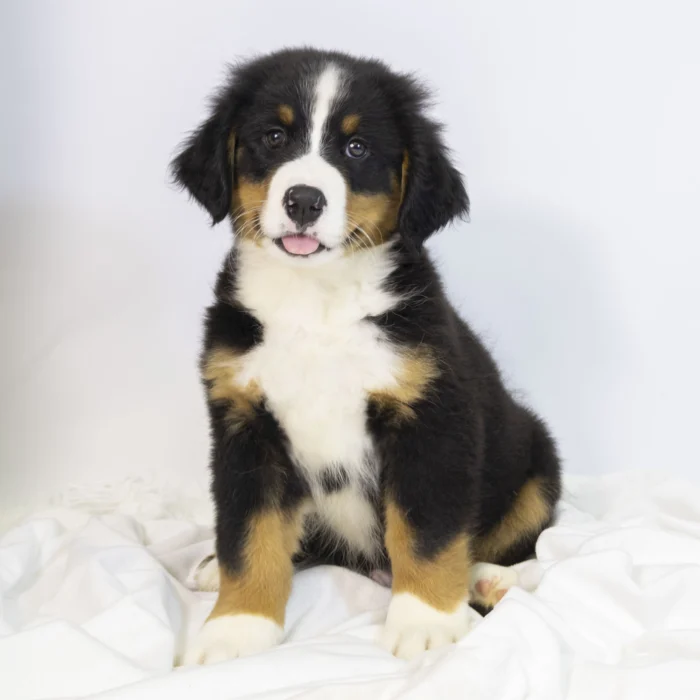
How Doral Really Lives, and Why It Changes Your Breed Shortlist
Doral grew up fast, and much of it grew up vertically and densely. Large parts of the city are newer construction: mid-rise condo buildings and walkable blocks around Downtown Doral and CityPlace Doral, rows of two- and three-story townhomes behind gates, zero-lot-line single-family homes with modest yards, and an older ring of larger properties around the golf courses. Set against all of that is an enormous warehouse, office and airport-adjacent business district along corridors like NW 25th Street and NW 36th Street.
Three features of that reality matter more than almost anything a breed description will tell you:
- Private grass is scarce. In a lot of Doral homes, the dog's bathroom trip is a hallway, an elevator, a lobby and a stretch of HOA-maintained landscaping. That means more leash time, more neighbours at close range, and a puppy that needs to be comfortable with both from the start. It also means you cannot simply open a back door at 2:00am.
- Walls, floors and ceilings are shared. In a detached house, a dog that barks at every passing sound is an annoyance. In a mid-rise or an attached townhome, the same dog becomes a documented complaint, and complaints are what get pet privileges reviewed.
- Floors are tile or porcelain. Easy to clean after accidents, and slick under a young puppy whose joints are still forming. Runners down the main traffic lanes are worth putting out before the puppy comes home, not after the first skid into a wall.
None of this rules out any particular dog. It does mean that "I want a big dog" and "I live in a 1,200-square-foot condo with a weight cap in the bylaws" need to be reconciled honestly before you fall in love with a face. Work out the constraints first, then pick inside them. That order is the single biggest predictor of whether the first year goes well.
Small and Medium Breeds That Suit Condo and Townhome Living
For a mid-rise or townhome household, start from the constraints rather than the breed roster. The dog has to stay under whatever adult weight your association allows, has to ride an elevator or climb interior stairs several times a day without drama, has to be reasonably quiet through shared walls, and has to be content without a large private yard. Work out those four numbers and habits first, and the shortlist narrows itself.
Breeds worth putting on that shortlist, with the honest trade-off attached to each:
- Havanese — bred for close human company, sturdier than they look, and generally sociable about constant foot traffic. The coat needs real, ongoing grooming attention.
- Maltese and Shih Tzu — small, companionable, content with indoor play plus short outdoor sessions. Both carry a coat that requires a grooming routine you should plan for from week one.
- Toy Poodle and Miniature Poodle — bright, highly trainable, and easier on households sensitive to loose hair. The intelligence cuts both ways: an under-stimulated Poodle invents its own hobbies, and you will not like them.
- Bichon Frise — cheerful and people-focused, usually a good fit where children are old enough to handle a small dog gently.
- Cavalier King Charles Spaniel — among the calmest small companions, happy to be a lap dog between walks, which suits elevator life well.
- Miniature Schnauzer and Yorkshire Terrier — both genuinely good small-space dogs, both honestly inclined to alert-bark at hallway noise. Very workable with early training; a real problem for a shared-wall household that ignores it.
- Dachshund — a good size for a condo, but jumping off furniture and repeatedly taking stairs are long-term spinal concerns, and Doral townhomes are full of interior stairs. Plan on carrying the dog down and using ramps.
- Pomeranian and Chihuahua — tiny footprint, large opinions. Budget serious socialisation effort so that every passing neighbour is not an event.
If noise through a shared wall is your main worry, say that out loud when you visit. It is a more useful filter than size, and it changes the conversation immediately.
Larger Breeds for Doral Homes With a Yard
Doral still has a great deal of single-family housing, particularly in the older neighbourhoods near the golf courses, in Doral Park, in Costa del Sol and in the lake-lined communities of Doral Isles. If you have a fenced yard and someone home for part of the day, a bigger dog becomes reasonable.
Breeds worth considering for these households include the Labrador Retriever, Golden Retriever, Goldendoodle, Bernedoodle, Cocker Spaniel, Beagle, Australian Shepherd and German Shepherd. A few honest notes by category:
- Retrievers and retriever crosses are the default family answer for good reason — biddable, tolerant of children, genuinely eager to please. They are also large, boisterous adolescents for a solid year or more, and a yard is not a substitute for exercise. A bored Labrador with a yard simply redecorates the yard.
- Herding breeds like the Australian Shepherd and German Shepherd are brilliant and will comfortably outwork an under-committed household. In South Florida their need for sustained activity collides with the hottest months of the year, when midday exercise is off the table. If you choose one, plan on early mornings, evenings, and real mental work indoors through the summer.
- Beagles are compact, friendly and famously nose-driven. Two cautions for Doral: they are vocal, which matters in a close-set neighbourhood, and they will follow a scent straight through an unlatched gate without looking back.
- Doodle crosses vary more than people expect in adult size, coat type and energy level. Ask about the parents rather than assuming a cross lands neatly in the middle of the two.
A yard in a Doral zero-lot-line neighbourhood is usually small and almost always visible and audible to the houses on either side. Walk your own fence line before you commit: check the gate latch, look for gaps a puppy can squeeze through, and count how much of the yard has shade at three in the afternoon. Shade is not a luxury here.
Heat, Humidity and Flat-Faced Breeds
This is the most under-discussed part of dog ownership in Miami-Dade, and it deserves a plain answer.
Flat-faced (brachycephalic) breeds have a harder time cooling themselves. Dogs do not sweat meaningfully; they shed heat by panting, which is far less efficient when the airway is short and crowded. The French Bulldog, English Bulldog, Pug, Boston Terrier and, to a lesser degree, the Shih Tzu all sit in this group. They are popular breeds and they can live happily in South Florida — but only with an owner who plans around the climate instead of hoping for the best.
Doral makes this harder than it has to be, for a specific and physical reason: a great deal of the city is new, paved and lightly shaded. Wide arterials, surface parking lots serving the business district, young street trees along the newer residential blocks, and long stretches of concrete sidewalk all hold heat well after the sun has dropped. A dog walking from a parking garage, across an open lot, to a lobby door is on hot hardscape the entire way, with no grass to step onto.
What planning actually looks like:
- Walks early in the morning and after sundown through the summer — not at 2:00pm because that is when you got home.
- Test the pavement with the back of your hand for several seconds. If you would not kneel on it, your dog should not walk on it.
- Short outings, water available, and a genuine willingness to turn around halfway. Loud, raspy, frantic panting with a wide tongue is not "he's just excited."
- No dog left in a parked car, ever, including for the length of one errand in a shaded garage.
- A frank conversation with your veterinarian about heat tolerance and airway health for the specific puppy you choose.
If your household genuinely cannot commit to that schedule, say so and let us talk through breeds that handle warmth more gracefully. A Miniature Pinscher, a smooth-coated small terrier type or a lightly built Italian Greyhound will manage a Doral summer more easily than a heavy-coated or short-muzzled dog. Having that conversation before you choose costs nothing and prevents a great deal of regret.
HOA Rules, Elevators and Shared Walls
Much of Doral's newer housing sits inside a homeowner or condominium association, and pet rules differ from building to building and community to community. Get the documents and read the pet section before you choose a breed, not after you have met one.
What to look for specifically:
- Weight limits. Many associations cap pets at a stated adult weight. A puppy that will mature well past that cap is not a problem you can negotiate your way out of later.
- Number of pets permitted per unit, which matters if you already have a dog or cat.
- Breed restrictions. Some associations, and some insurers behind them, maintain their own lists. These are not consistent between communities and they are not always logical, but they are enforceable.
- Where the dog may relieve itself, and which doors and elevators pets are required to use. Service elevators and designated side exits are common in newer buildings, and that routing becomes your daily walk whether you like it or not.
- Leash and carrying rules in lobbies, corridors, pool decks and amenity areas. Some buildings require small dogs to be carried through common space entirely.
- Registration and deposits. Some communities require the dog to be registered with management, sometimes with vaccination records on file.
Two further Doral practicalities. If you rely on the city trolley or any other shared transport, check its current pet policy rather than assuming your dog can ride. And if you plan to use a City of Doral park or a fenced dog area, confirm the city's current park and pet ordinances with the city directly — rules on leashes, proof of vaccination and which areas permit dogs do change, and we would rather you check than take a web page's word for it.
Bring what you learn with you when you visit. "My building caps dogs at a stated adult weight and requires the service elevator" is one of the most useful sentences you can hand our team.
Noise, Gates and Lobbies: Raising a Calm Dog in a Busy City
A dog's tolerance for background noise is learned young, and Doral gives a puppy plenty to learn. Depending on where you live, the daily soundtrack may include elevator chimes and lobby doors, a rolling gate motor, delivery trucks serving the business corridors, landscaping equipment on an HOA schedule, and — on blocks nearer the airport and its approach paths — aircraft overhead.
You cannot remove any of that, so the goal is habituation rather than avoidance. The window for easy habituation is early, and it closes faster than people expect.
- Pair noise with something good. When the gate motor runs or a plane passes, that is a treat moment. You are teaching the puppy that the sound predicts nothing bad.
- Practise the route, not just the destination. Walk the hallway, ride the elevator one floor and come back, stand in the lobby for sixty seconds and leave. Short, boring, successful repetitions beat one long overwhelming outing.
- Do not soothe panic into a habit. If the puppy startles, stay matter-of-fact and move a little further from the source rather than dropping to the floor in sympathy.
- Build a quiet retreat. A crate or bed in the most interior, least noisy corner of the home gives the dog somewhere to decompress — valuable in an apartment where there is nowhere else to go.
- Choose temperament with this in mind. If your unit sits above a lobby, beside a trash chute or under a flight path, a naturally alert, vocal breed is a steeper project than a placid companion breed. That is worth saying out loud before you choose.
Keep all of this inside whatever your veterinarian advises for your puppy's vaccination stage — early socialisation and sensible caution about where the puppy's paws go are not in conflict, they just need coordinating.
Long Workdays and a Young Puppy
Doral is home to a large concentration of logistics, trade, corporate and airport-adjacent employers, and for many households here the working day is long and the commute is real. That is not a reason to skip a dog. It is a reason to be honest about the first few months, when a puppy's needs are least flexible.
A young puppy cannot hold its bladder for a full workday. A common rule of thumb is roughly one hour per month of age, up to a limit — which puts an eight-week-old puppy on a two-hour clock, not an eight-hour one. Households that make long days work usually do several of the following:
- Stagger the household schedule for the first several weeks so that someone is home at intervals rather than everyone leaving and returning together.
- Line up a midday visit — a neighbour, a family member or a hired walker — and arrange it before the puppy arrives, not during the first stressful week.
- Take time off at the start. A long weekend or a week of leave at the beginning pays for itself in house-training progress you will not have to redo.
- Crate-train properly, so the crate is a safe den rather than a punishment. This matters doubly in an apartment, where a loose, unsupervised puppy and an open balcony are a genuinely dangerous combination. Balcony railings and screen panels are not dog-proof.
- Choose temperament accordingly. A calm companion breed copes with a quiet apartment far better than a herding dog that needed a job three hours ago.
If you are a single-person household working long shifts, tell us that directly. Some breeds and some individual puppies handle that pattern better than others, and steering you toward one of them is a better outcome for everyone than agreeing with the first puppy you point at.
Hurricane Season With a Dog in a Doral Home
Storm planning is easy to put off, and a dog has to have a place in the plan. The plan needs to exist at the start of the season, not during the week a storm is named and the shelves are empty.
The basics apply everywhere: a carrier the dog is already comfortable entering, at least a week of food and any medication set aside, vaccination paperwork somewhere waterproof or photographed on your phone, a collar tag that is actually legible, and a microchip whose registration details you have genuinely updated to your current phone number. Confirm your own evacuation zone with Miami-Dade County rather than assuming, and find out in advance whether the shelter or hotel you would use accepts pets, because that single fact determines the whole plan.
Two things are specific to how Doral is built:
- If you live in a mid-rise, assume the elevator will not run. Extended power outages are a normal storm consequence, and a dog on the eighth floor then needs to go down and up an interior stairwell several times a day. For a small dog, that means a carrier you can manage one-handed with a torch in the other. For a large dog, it means a frank assessment of whether you can physically do it — and that is worth factoring into your size decision now, not discovering in August.
- Expect standing water afterwards. The city is low, flat and heavily paved, and heavy rain pools on hardscape and in swales and landscaped areas. Floodwater after a storm carries debris, chemicals, sharp objects and displaced wildlife. Keep the puppy leashed, keep it out of standing water, and rinse paws when you come back in.
Add one more item: a plan for where the dog relieves itself if going outside is unsafe for a day. Training a puppy to use pads on a balcony-adjacent tiled area, well before the season, is a small bit of preparation that saves a miserable twenty-four hours.
Fleas, Ticks and Heartworm Never Take a Winter Off
Owners arriving from cooler states often expect a seasonal break from parasite control. In Miami-Dade there is no such break. Warm temperatures and high humidity year-round mean fleas, ticks and mosquitoes stay active through every month, and mosquitoes are the vector for heartworm, which is a serious and expensive disease to treat and a straightforward one to prevent.
Treat prevention as a continuous, permanent, budgeted cost from the first week rather than something you start when you see a flea. Practical points worth raising at your first veterinary appointment:
- Year-round prevention, not seasonal. Ask your veterinarian which products suit your puppy's current age and weight, and when the dose needs recalculating as the puppy grows — this catches people out during the fast growth months.
- Heartworm testing and prevention schedule appropriate to a puppy, and what the plan looks like going forward.
- Shared grass is shared parasites. HOA landscaping, condo dog-relief areas and community lawns are used by every dog in the building, which raises the value of consistent prevention over the occasional treatment.
- Check after time in longer grass — canal banks, golf-course edges and unmowed lot margins are where ticks are most likely to be picked up. Run your hands over the dog, including ears, armpits and between the toes.
- Treat the home, not only the dog, if you do get an infestation. Fleas live in carpet, bedding and upholstery, and tile floors with rugs are no exemption.
Water Safety: Pools, Lakes and Canals
Between private pools in the single-family neighbourhoods, community pool decks in the townhome and condo communities, and the lakes and canals around Doral Isles and the golf courses, many dogs here live within sight of water. That deserves deliberate thought rather than an assumption that dogs swim.
- Not every dog swims well. Short-legged and heavy-chested breeds — bulldogs and dachshunds among them — can struggle badly and tire fast. Never assume instinct will carry a puppy through.
- Teach the exit. The most important pool skill is not swimming, it is knowing where the steps are and being able to find them from anywhere in the pool. Practise it repeatedly, from different points, until it is automatic.
- Supervise every single time. A pool cover, a screen enclosure or a patio door is a convenience, not a barrier — screens tear and doors get left open.
- Consider a flotation vest for dock, boat or extended pool days, particularly for a puppy or an older dog.
- Canals and lakes are not pools. Steep or soft banks make getting out hard, and South Florida waterways hold wildlife a curious puppy should never meet. Keep a dog leashed near the water's edge and do not throw toys into a canal.
- Rinse and dry after swimming, especially the ears. Chlorine and standing water both irritate skin, and damp ears in this humidity invite infections.
Getting to Petland Pembroke Pines from Doral
We are at 356 N University Drive, Pembroke Pines, FL 33024, in Broward County. From Doral the trip runs north into Broward and then east along Pines Boulevard to University Drive. There are two sensible ways to frame it depending on which side of the city you start from.
- Via the Palmetto Expressway (SR-826) and I-75. From the eastern side of Doral, nearer the Palmetto, head north on SR-826, which continues north onto I-75. Leave I-75 at Pines Boulevard and head east on Pines Boulevard to University Drive.
- Via Florida's Turnpike. From the western side of Doral, nearer NW 107th or NW 114th Avenue, the Turnpike interchanges along NW 12th Street and NW 41st Street put you northbound toward southwest Broward, where you can pick up Pines Boulevard and head east to University Drive.
We do not publish drive times or mileage here. Put the full address into your navigation app before you set off, let it pick the route for the conditions on the day, and give yourself room on either side of your plan.
Before you make the trip, call. We are open noon to 9:00pm Monday through Friday and 10:00am to 9:00pm Saturday and Sunday. Which puppies are in the store changes, so phoning (954) 250-7771 first is the only reliable way to know what you would actually be coming to meet. Tell us the size range, coat and temperament you are after, and we can tell you whether the trip is worth making that day.
What to Bring and What to Ask When You Visit
A puppy visit with the whole family is a bigger event than people expect, and a little preparation makes it considerably better.
Bring with you:
- Everyone who will live with the dog, if you can manage it. A puppy that one person adores and another is nervous around is a difficult way to start.
- Your building's or HOA's pet rules — at minimum the adult weight cap and any breed restrictions.
- A realistic picture of your weekly schedule: who is home, when, and for how long.
- Your questions written down. In the room, with a puppy in your arms, you will forget them.
- A short, honest list of what you can and cannot live with — grooming commitment, shedding, barking, exercise needs, adult size.
Worth asking while you are there:
- What this breed's expected adult size and grooming needs are, and what that means for your weight cap.
- What the puppy has been eating, so you can keep it on the same food at first if you choose to.
- What paperwork and records come with the puppy, and what veterinary care it has had.
- What the health guarantee covers — ask our team directly for the current terms rather than relying on anything written here. The terms are specific and we are not going to paraphrase them on a web page.
- Whether you can spend time with a puppy rather than only viewing it, and what the store's handling policy is.
A note for families with children. Bring them, by all means, and set expectations in the car on the way: today may be about meeting puppies, not taking one home. That single sentence saves a great deal of difficulty in the parking lot. Doral is a heavily bilingual city — if you would prefer to be helped in Spanish, ask when you call whether a Spanish-speaking team member will be on shift when you plan to visit.
The First Two Weeks in Your Doral Home
The drive home is the easy part. What makes the first fortnight go smoothly is almost entirely what you set up before the puppy walks in the door — and in a Doral apartment or townhome, a few of those preparations are specific to the building rather than the dog.
- A crate in a quiet interior corner, door open, something comfortable inside, so it becomes a den before it becomes a requirement. Away from the front door and the lift lobby if you can.
- A bathroom route decided in advance. Work out which exit and which elevator you will use at 2:00am, how long the trip takes end to end, and what you will do if the puppy cannot wait through the hallway. Keep a towel and cleaner by the door for the first fortnight. Then pick one outdoor spot and use it every single time — that consistency is what makes house-training fast.
- Runners over tile. Slick porcelain and a clumsy puppy are a poor combination for developing joints, and the hallway from crate to door is the stretch that matters most.
- Balcony and screen doors checked. Gaps under railings, torn screens and a door that does not latch are the three apartment hazards worth fixing on day one.
- A veterinarian chosen and a first appointment booked — do this in week one. Bring whatever paperwork came with your puppy and use the visit to set the schedule for vaccinations, heartworm prevention and year-round flea and tick control.
- Enzymatic cleaner, not ordinary household cleaner. Accidents will happen, and it is the residual smell that causes repeats in the same spot.
- Food kept the same at first. If you change brands at all, do it gradually over a week or more. An abrupt switch plus the stress of a new home is a reliable recipe for an upset stomach.
Then be patient through the quiet period. Many puppies are subdued for a day or two in a new home before they start showing you who they really are. Begin socialisation early and keep it gentle — neighbours, the elevator, the gate motor, traffic noise, children, other dogs at a comfortable distance — within whatever your veterinarian advises for your puppy's vaccination stage. A dog that is relaxed in a busy lobby at six months old will be easy company for the next decade.
Questions from Doral families
No. Our store is at 356 N University Drive in Pembroke Pines, in Broward County, and there is no Doral location. The drive is north from Doral into Broward County and then east on Pines Boulevard to University Drive, via the Palmetto Expressway and I-75 or via Florida's Turnpike.
We do not publish puppy prices on this page. Call (954) 250-7771 and ask about the puppies currently available, and the team can talk you through it directly.
Yes, and you should. Which puppies are in the store changes, so calling (954) 250-7771 before you leave is the only reliable way to know what you would meet on a given day. Tell us the size range and temperament you are after and we can tell you whether the trip is worth making.
Start with the number itself and bring it with you, along with any breed restrictions in your bylaws and the rules on which elevator and exit pets must use — those three facts narrow the shortlist faster than anything else. Then add your own non-negotiables: grooming commitment, shedding, and above all noise tolerance through a shared wall. Tell the team all of that before you look at any puppy, because a dog that clears your weight cap but alert-barks at every hallway footstep is the wrong answer in a mid-rise even though it fits on paper.
Not a bad idea, but a commitment. Flat-faced breeds such as the French Bulldog, English Bulldog, Pug and Boston Terrier cool themselves less efficiently than longer-muzzled dogs, so a Doral summer means early-morning and post-sunset walks, short outings, testing pavement temperature with your hand, constant access to water, and never leaving the dog in a parked car. Talk to your veterinarian about heat tolerance for the specific puppy. If your schedule cannot flex around the afternoons, ask us about breeds that handle the climate more easily.
Ask our team for the current terms directly, either on the phone or in the store. The specifics matter too much to summarise loosely on a web page, and we would rather you read the actual document than a paraphrase of it. The same goes for what records and paperwork come with a puppy — ask, and ask to see them.
Yes, and ideally everyone who will live with the dog, so you are not discovering disagreements after the fact. Set expectations in the car on the way: today may be about meeting puppies rather than bringing one home. We are open noon to 9:00pm Monday through Friday and 10:00am to 9:00pm Saturday and Sunday, so pick a window when nobody in the group is tired or rushed.
A crate set up in a quiet interior spot, a bathroom route decided in advance including which exit and elevator you will use overnight, rugs or runners over tile floors, enzymatic cleaner, and a veterinary appointment already booked for the first week. Ask what the puppy has been eating so you can keep it on the same food at first, and change brands only gradually. At that first veterinary visit, ask about year-round flea, tick and heartworm prevention — in Miami-Dade it is a permanent cost, not a seasonal one.
Plan for the elevator to be out, because extended power outages are a normal storm consequence. That means carrying a small dog down an interior stairwell several times a day, or honestly assessing whether you can manage a large one — worth factoring into your size decision before you choose. Set aside a week of food and medication, keep a carrier the dog already uses, photograph vaccination paperwork, make sure the microchip registration has your current phone number, confirm your evacuation zone with Miami-Dade County, and find out in advance whether the shelter or hotel you would use accepts pets. Train the puppy to use pads indoors before the season starts, in case going outside is unsafe for a day.
Call (954) 250-7771 before you make the drive from Doral and ask. The same call lets us tell you which puppies are in the store that day, which is the main reason to phone ahead.