Choosing a Puppy for the Way Miami Actually Lives
Miami is not one place, and advice that works in one neighborhood falls apart in another. Downtown, Brickell, Edgewater and the Omni area are vertical: dogs there live above the street, ride elevators several times a day, and do their business on a strip of grass shared with dozens of other dogs. Little Havana, Allapattah, Shenandoah, The Roads, Flagami and West Miami are mostly low-rise, with duplexes, small lots, chain-link or wood fences and tile floors. Coconut Grove and Morningside have tree canopy and shade. Kendall and the far western neighborhoods bring townhome rows, HOA rules and sidewalks that bake in the afternoon.
Before you fall in love with a breed, get honest about three things. First, your floor plan and your building. Many Miami condo associations cap dog weight, restrict certain breeds, require registration with management, and designate which elevator a dog may use. Read your own documents rather than relying on what a neighbor told you, and do it before you choose a breed. Second, your schedule. A puppy needs to go out every couple of hours at the start, and from a high floor that means a real trip, not opening a back door. Third, noise. Shared walls and concrete corridors carry sound, and a vocal breed in a tower creates friction with neighbors that the same breed in a fenced yard never does.
None of that rules out a dog. It just changes which dog. Tell our team your actual living situation when you walk in, including the awkward parts, and the conversation gets more useful than a list of breed names.
Condo Towers, Duplexes and Yards: Three Different Dogs
If you live in a tower, prioritize a puppy that will mature into a manageable size, travel calmly in an elevator, settle while you work, and tolerate strangers in close quarters. A dog that greets every person in the lobby with a lunge and a bark makes your daily life harder. Small and medium companion breeds tend to fit this life, but temperament matters more than the number on the scale: a calm medium dog is easier in a high-rise than a wired small one.
If you live in a duplex or small single-family house in a neighborhood like Shenandoah, Flagami or Little Havana, you have more flexibility. Check the fence before you check the breed. South Florida fences take weather, and a gap at the bottom that a grown dog could never fit through is a wide-open door to a twelve-week-old puppy. Look at the gate latch, the pool barrier, whether a canal or retention pond backs onto the lot, and how much shade the yard has at two in the afternoon.
If you live in a townhome with a shared green area, read the HOA rules on leash length, waste stations, and whether dogs may be off leash anywhere on the property. A large share of a townhome dog's exercise ends up on a leash on pavement rather than loose in a yard, which loops straight back to the heat question below.
Across all three, think about where your dog will actually be during the hottest part of the day. In Miami, the answer is almost always inside, which puts a premium on a puppy that can be mentally occupied indoors rather than one that needs a long run every afternoon to stay sane.
Breeds That Tend to Work Well for Miami Households
These are starting points for a conversation, not rules. Every puppy is its own animal, and temperament varies within every breed.
High-rise and apartment living
The Havanese is an easy one to recommend in Miami, both for its Cuban origins and because it is small, sociable and built for company rather than endurance. Maltese, Yorkshire Terriers, Shih Tzu (a flat-faced breed, so read the heat section below before you commit), Bichon Frise, Toy and Miniature Poodles, Maltipoos, Cavalier King Charles Spaniels and Miniature Schnauzers also tend to adapt well to condo life, provided you commit to the elevator routine and to early socialization with neighbors, dogs and lobby noise. Check your building's weight limit against the breed's adult size, not its puppy size.
Families with children in a house or duplex
Golden Retrievers, Labrador Retrievers, Mini and Medium Goldendoodles, Cockapoos, Beagles and Boston Terriers are often good matches, with the caveat that retrievers grow quickly and need structured exercise at sensible hours. Boston Terriers are shorter-faced, so read the heat section before you commit.
Low-key households and first-time owners
Cavaliers, Havanese, Bichons and Mini Poodles are forgiving of beginner mistakes. A Dachshund can be delightful and is famously stubborn about house training, which is worth knowing when the nearest grass is three floors down.
Breeds that need more thought in South Florida
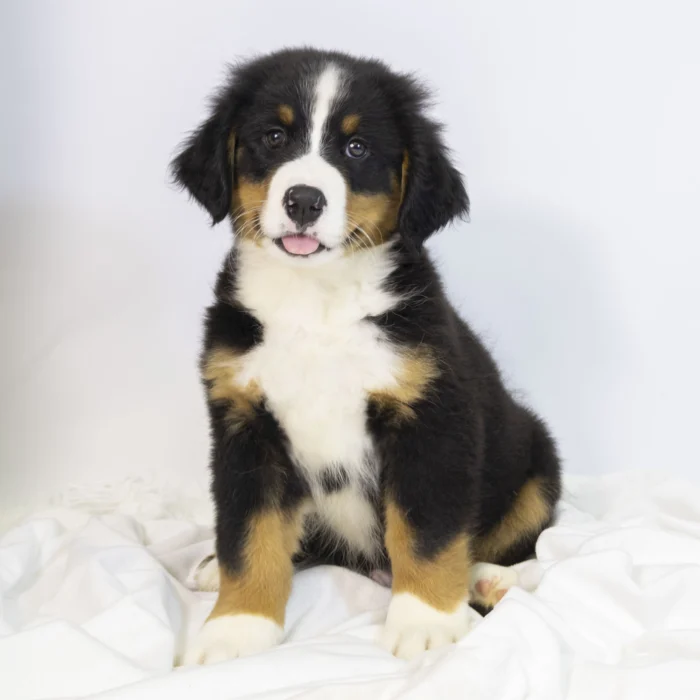
Siberian Huskies, Alaskan Malamutes, Bernese Mountain Dogs, Great Pyrenees and other heavy double-coated breeds carry a coat built for a climate Miami does not have. People do keep them here successfully, but it takes air conditioning discipline, pre-dawn exercise and realistic expectations. High-drive working breeds such as Border Collies, Australian Shepherds and Belgian Malinois need a job, and a tower apartment rarely provides one.
If you have a specific breed in mind, call (954) 250-7771 and ask what is in the store. Availability changes, and we would rather you know before you set out than after.
Heat, Humidity and the Flat-Faced Breed Question
Miami heat is not just a summer problem. The humidity that makes a July afternoon feel punishing also shows up in May and October, and a dog cools itself mainly by panting, which works poorly when the air is already saturated.
That matters most for brachycephalic, or flat-faced, breeds: French Bulldogs, English Bulldogs, Pugs, Boston Terriers and Shih Tzu among them. These breeds can live good lives here, but they overheat faster than long-nosed breeds and are the first to get into trouble on a midday walk. If you want a Frenchie, go in with a plan: short outings early and late, air conditioning that stays on when you are out, water everywhere, never a dog left in a parked car, and a veterinarian who knows the breed. If you cannot commit to that, a Havanese or a Mini Poodle will have an easier time in the same apartment.
Pavement is the other thing people underestimate. Asphalt and concrete here hold heat long after sunset, and rooftop dog decks on condo buildings can be brutal because they are flat, dark and unshaded. Put the back of your hand on the surface for several seconds before you walk a puppy across it. Paw pads burn.
Practical adjustments that work in this climate:
- Walk before sunrise and after dusk, and use the shaded side of the street in between.
- Carry water on every single outing, even a short one.
- Learn what heavy panting, drooling and brick-red gums look like on your dog.
- Build indoor games, so a skipped afternoon walk does not turn into a destroyed sofa.
Ask our team whether we stock cooling and hydration gear for hot-weather walking when you visit.
Walking a Puppy from the Eleventh Floor
House training a puppy in a Miami high-rise is a different project than house training one in a house, and nobody warns you properly. A young puppy may need to relieve itself within minutes of waking, eating or playing. From a high floor, the trip down takes time you do not have, which means accidents in the hallway, the elevator or the lobby until the routine clicks.
What tends to work: pick one exit and one patch of grass and use it every time, so the surface itself becomes the cue. Carry the puppy to the elevator for the first few weeks rather than walking it across shared lobby floor. Keep a towel, bags and cleaner by the front door. Feed on a fixed schedule so the output becomes predictable. Expect weeks rather than days, and expect some regression whenever the routine changes.
Socialization is the genuine upside of tower living. A Brickell or Edgewater puppy meets far more people, dogs, strollers, skateboards and delivery carts in everyday life than a suburban puppy does. Handled calmly, that produces a wonderfully unflappable adult dog; handled badly, a dog that barks at every elevator ding. Reward calm, keep greetings short, and do not let every stranger swoop in without asking.
Also think about where your dog will burn energy. The City of Miami and Miami-Dade County both operate parks with designated dog areas, including the dog park at Margaret Pace Park in Edgewater, but hours, fees, registration and vaccination requirements are set by each park's operating authority, so check the current rules before you go. With a puppy that has not finished its vaccine series, your veterinarian's advice should come before any park's minimum requirement.
Hurricane Season With a Dog in Miami
Storm planning is part of life here. Adding a dog changes it, and that change is far easier to make in February than during a watch.
Have a carrier your dog fits in and will enter willingly, because a crate-trained dog is far easier to shelter, board or evacuate with. Keep a week or more of food and any medication in your supply bin, rotated so nothing expires, and water for the dog as well as the people. Store copies of vaccination records somewhere you can reach without power, since boarding facilities and pet-friendly shelters ask for them. Make sure the collar tag and the microchip registration both carry a number you will actually answer, and confirm the chip details are current rather than assuming they are.
Then think about your building or block, because that is where a generic checklist stops helping. If you live in a tower and the elevators go out, you are carrying your dog down and up the stairs, which is manageable for a Maltese and a serious problem for a Labrador. If you live in a low-rise house in a flood-prone pocket, you need to know in advance where you would take the dog. Check Miami-Dade County's current emergency management guidance on pet-friendly evacuation options and what to bring before the season rather than during it, since designated locations and requirements change from year to year.
Smaller details matter too. Shutters make for a dark apartment, so keep a familiar bed and a chew in whichever room you shelter in. Wind and pressure changes unsettle a lot of dogs, and a puppy that has learned its crate is a safe place rides out a bad night far better than one that has not.
Fleas, Ticks, Pools and the Water Around Miami
South Florida does not get a hard freeze, so fleas and ticks never take a season off. Year-round parasite prevention is the norm here, heartworm included, and it is a conversation for your first veterinary visit rather than something to postpone until you see a problem. Mosquitoes carry heartworm, and Miami has mosquitoes in every month of the year.
Water is everywhere in this city, in forms that behave differently. Pools, whether yours or the building's, deserve treating as a hazard until proven otherwise. Puppies fall in, and not every dog can find the steps again. Teach your dog where the exit is, supervise every time, and consider a barrier while the dog is young. Short-legged and heavy-chested breeds are weaker swimmers than people assume, and flat-faced breeds tire fast in water. Rinse chlorine off the coat and dry the ears afterward, because warm damp ears are how ear infections start here.
Biscayne Bay and the beaches bring their own rules: salt water upsets stomachs if a dog drinks it, hot sand burns pads, and many Miami-area beaches do not allow dogs at all, so check the location's posted rules rather than assuming. Canals run through a great deal of Miami-Dade, and a canal bank is no place to let a dog off leash or to let one drink, since the banks are steep and alligators are present in South Florida canals and lakes.
One local hazard is worth knowing by name. Cane toads, also called bufo toads, are established across South Florida and are poisonous to dogs that mouth them; they are out in warm, wet weather and after dark, which is exactly when you walk a dog in summer. Learn what they look like, and ask your veterinarian in advance what to do if your dog ever has one in its mouth.
Grooming is the year-round commitment people forget to plan for: curly and long coats, which covers many of the breeds that suit condo living, mat in this humidity without a regular professional cycle. Ask our team about coat care for the breed you are considering.
Driving to Pembroke Pines from Miami
Our store sits on North University Drive in Pembroke Pines, in southern Broward County, north of the Miami-Dade line. Routes depend entirely on which Miami neighborhood you start in, so here is the general shape of it by road name and direction. For live traffic and exact turns, use your own navigation app.
- From Doral, Hialeah, Miami Lakes and the airport area: the usual approach is the Palmetto Expressway, State Road 826, heading north to Interstate 75, then north on I-75 and east on Pines Boulevard toward University Drive.
- From Downtown, Brickell, Edgewater and the Upper Eastside: common routes are I-95 north into Broward, then west, or cut over to the Florida Turnpike and run north to the Pines Boulevard exit.
- From Kendall, Westchester and the southwest: the Turnpike northbound is the common choice.
- From the Hialeah and Miami Gardens side: US-441, also signed as State Road 7, runs north through Broward and connects to the east-west cross streets.
Whichever way you come, the last stretch is east or west on Pines Boulevard and then onto University Drive. The address is 356 N University Drive, Pembroke Pines, FL 33024. If you want to check what is in the store before you set out, call us at (954) 250-7771.
What to Expect When You Visit With the Family
Bring everyone who will live with the dog. That includes the person who is least enthusiastic, because their reaction to a particular puppy is information, and the children, because how a puppy handles a seven-year-old is something you want to see rather than guess. If anyone has allergies, say so early, so we can talk about coat types honestly instead of overselling the idea of a hypoallergenic dog, which does not really exist.
Bring your building's paperwork too, or at least the numbers from it. If your Miami condo or HOA has a weight limit, a breed restriction or a registration requirement, tell us at the start rather than after you have fallen for a puppy your association will not approve.
Come with questions written down. Useful ones: how big will this puppy likely get, what is this breed's energy level in a home like mine, what grooming does it need in this climate, what will the first veterinary visits look like, and what should I buy before the dog comes home. Ask our team about the health guarantee and the paperwork that comes with a puppy, so you hear the current terms directly from us.
Our hours are Monday through Friday from 12:00pm to 9:00pm, and Saturday and Sunday from 10:00am to 9:00pm. Call ahead on (954) 250-7771 if you want to visit at a quieter time or to see a particular breed, and we will tell you what to expect that day. Feed the kids first: puppy visits take longer than people expect, and nobody makes a good decision about a ten-year commitment while a toddler is melting down.
It is completely fine to visit, ask everything, and go home to think about it. A puppy is a decade-long relationship, and we would rather you come back next week certain than leave today unsure.
The First Few Weeks in a Miami Home
Set the apartment or house up before the puppy arrives, not after. Decide where the crate goes, where the water bowl lives, which room is off limits, and who handles the overnight trips outside. In a condo, work out the exit route in advance and check whether your building requires pets to use a service elevator or a particular door. In a house, walk the yard and fix the fence gap you have been ignoring.
Line up a veterinarian in your own neighborhood before you need one, and book the first appointment early. Ask at that visit about year-round flea, tick and heartworm prevention, and about what to do if your dog ever mouths a cane toad, because that answer is time-sensitive. Keep the puppy's diet consistent at first, since a sudden food change on top of a move is a reliable way to upset a young stomach. Expect broken sleep for a while, and expect chewing.
Follow your vet's guidance on what socialization is safe before the vaccine series is complete, because a busy sidewalk, a shared grass strip used by every dog in the building and a public dog park carry different levels of risk at different ages.
Finally, do the boring administrative things in week one. Register the dog with your building if your association requires it, ask your vet about the county rabies tag and license once your dog is of age, update the microchip with your current phone number, and add the dog to your hurricane supply plan if you are bringing one home between June and November. None of it is exciting. All of it is the difference between a smooth first year and an avoidable mess.
Questions from Miami families
No. Our store is in Pembroke Pines, in Broward County, at 356 N University Drive, Pembroke Pines, FL 33024. We do not have a Miami location. If you are coming from a Miami-Dade neighborhood, the general routes are the Palmetto Expressway to I-75, I-95 northbound, the Florida Turnpike, or US-441 depending on where you start.
We do not publish puppy prices online. Price depends on the individual puppy, so the honest answer is to call us at (954) 250-7771 or visit the store and ask about the specific puppy you are interested in.
Yes, and we encourage it. Everyone who will live with the dog should meet it before you decide, children included, because how a puppy reacts to a child is something you want to see for yourself. If you want unhurried time with a puppy, call ahead and ask which times of day are quietest.
Not a bad idea, but a commitment. Flat-faced breeds overheat faster than long-nosed breeds, and Miami heat and humidity make that a real, year-round consideration rather than a summer one. If you can walk early and late, keep the air conditioning running when you are out, and work with a vet familiar with the breed, a Frenchie can do well here. If you cannot, ask us about breeds that handle the climate more easily.
Small to medium companion breeds that settle indoors and tolerate close quarters tend to do best, such as the Havanese, Maltese, Yorkshire Terrier, Bichon Frise, Cavalier King Charles Spaniel, Toy or Miniature Poodle and Miniature Schnauzer. A Shih Tzu also suits condo life but is flat-faced, so plan walks around the heat. Check your association's rules first, since many Miami buildings have weight limits, breed restrictions and registration requirements.
Our open hours are Monday through Friday from 12:00pm to 9:00pm, and Saturday and Sunday from 10:00am to 9:00pm. If you are coming up from Miami to see a particular breed, call (954) 250-7771 first so we can confirm whether to set a time and tell you what is in the store that day.
Ask our team directly, either by phone or in the store, so you get the current terms and the paperwork straight from us rather than a summary.
Yes, we carry pet supplies alongside puppies. Call us at (954) 250-7771 or ask in the store what we currently stock for setting up a new puppy, and tell us your layout so we can help you work out what you actually need before the dog comes home.