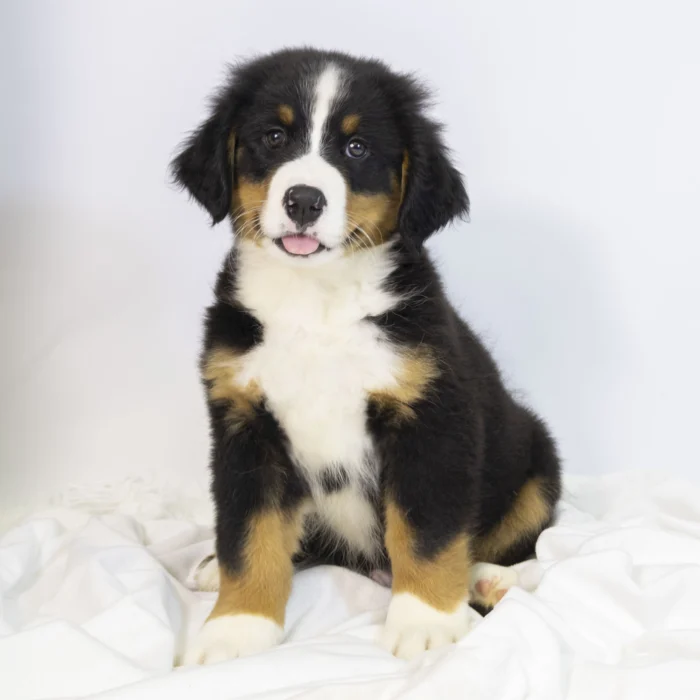
Buying a Puppy When You Live in North Miami Beach
Looking at puppies outside your own city means a drive into another county, so be plain with yourself about what you would be driving toward. You are coming to a physical store rather than a listing on a classifieds site or a stranger's driveway off 163rd Street. You get to see how the puppies are kept, watch how staff pick one up and put one down, ask an awkward question and read the answer on someone's face, and ask whether your kids can spend time with a puppy long enough for the novelty to wear off. You can also leave without a puppy — we would rather you treat that as the normal first visit.
The practical details: Petland Pembroke Pines, 356 N University Drive, Pembroke Pines, FL 33024, phone (954) 250-7771. We are open Monday through Friday from 12:00pm to 9:00pm, and Saturday and Sunday from 10:00am to 9:00pm. Those evening hours mean a visit can happen after work or after school rather than costing someone a vacation day.
One thing we will not do is quote you a puppy price on a web page. We do not publish puppy prices anywhere. If you want to understand what a particular puppy involves, call us or come in and ask a person directly.
What North Miami Beach Housing Means for the Dog You Choose
North Miami Beach is not one housing type pretending to be a city. It is at least three, and each one points you toward a different kind of dog.
Eastern Shores is the outlier — single-family homes on canals off the Intracoastal, with real yards, docks and seawalls. If that is you, size and energy are less of a constraint than water is, and the section below on canals and pools is the one to read twice.
West of West Dixie Highway and through the older platted blocks around Fulford, Sunkist Grove and Highland Village, you get the classic South Florida formula: a one-story concrete-block house from the fifties or sixties, a compact lot, a carport instead of a garage, and a yard bounded by chain link, hedge or wood. Those yards are usable but small, and the fence line is worth walking before you bring a puppy home — a determined terrier will find the gap under a hedge you never noticed.
Then there are the condos and apartments: the mid-rises along Biscayne Boulevard and NE 163rd Street, the rental buildings near the Mall at 163rd Street, the newer towers toward the Aventura edge. Life with a puppy in a building is a different project. Every potty trip is an elevator ride, which means a young puppy gets carried through a lobby several times a day and still sometimes does not make it. Expect to use pads indoors for a while, expect neighbors to hear a crying crate through a shared wall, and look hard at your balcony before day one — older railings and decorative screens often have gaps a small puppy can get a head through, and a sun-baked balcony floor is not a relief area.
If someone is home during the day, a puppy settles and house-trains faster than one left alone in a condo for nine hours. If nobody is home, line up a midday walker before the puppy arrives rather than after the first accident.
Condo and HOA Pet Rules to Confirm Before You Pick a Breed
This is the part buyers skip and then regret, so it goes early.
In a city with this much condo and rental stock, the association — not the county — usually decides which dog you can have. Get the following in writing before anyone in your family starts attaching to a particular breed.
- The maximum adult weight allowed. Ask for the number rather than assuming there isn't one, because caps are often lower than people expect. A puppy that matures well past the cap is a problem you cannot negotiate your way out of later.
- Any restricted-breed list. Some buildings keep one, often driven by the association's insurance carrier rather than by anything the board personally believes. The lists vary, but larger guardian and working breeds are the ones that tend to appear.
- The practical rules. How many pets are allowed, whether there is a pet deposit or registration fee, whether dogs must use a service elevator, and whether the building designates a relief area.
If you rent you need two yeses: your landlord's permission does not override the association's rules, and the association's does not override your lease.
Separately, Miami-Dade generally expects dogs to be licensed and currently vaccinated against rabies, and ordinances change — check current requirements with Miami-Dade Animal Services and the City of North Miami Beach rather than relying on what a neighbor did five years ago.
Bring whatever your building tells you in writing when you come in, so our team can talk sensibly about adult size and temperament inside your actual constraints.
Breeds That Tend to Suit North Miami Beach Households
No store should tell you there is one right breed for a city, but the constraints above do narrow things honestly.
For a condo or apartment
Small and moderate-energy wins, and so does a dog that does not announce every person in the hallway. Maltese, Havanese, Shih Tzu, Bichon Frise, Cavalier King Charles Spaniel, Miniature and Toy Poodle, Yorkshire Terrier, Maltipoo and Cavapoo all live well in apartments when they get out properly. Miniature Schnauzers and Pomeranians are excellent company and genuinely vocal, which is worth knowing before you share a wall. Dachshunds suit small spaces, but think about stairs and about jumping down off furniture.
If you have a yard in Eastern Shores or the older single-family blocks
A real yard opens up the Labrador Retriever, Golden Retriever, Goldendoodle, Australian Shepherd, Beagle, Cocker Spaniel and Pembroke Welsh Corgi. These are dogs that need a job or a game, not just an enclosure — a bored retriever with a yard is still a bored retriever — and in this climate the exercise has to be scheduled around the heat rather than your convenience.
Families with young children
Look for a sturdy, forgiving temperament and an adult size your child will not knock over or be knocked over by. Labrador and Golden Retrievers, Beagles, Cocker Spaniels, Havanese and the larger Poodle mixes are often good fits. Very small toy breeds are more fragile than children understand, which makes them a better match for calm, older kids.
Breeds to think about carefully in Miami-Dade
Flat-faced breeds — French Bulldog, English Bulldog, Pug, Boston Terrier, Pekingese and some Shih Tzu — can do well here, but they move air inefficiently and this is a hot, humid city. That means early-morning and after-dark walks, air conditioning that genuinely works, no mid-afternoon park sessions, and a vet conversation about breathing before anything goes wrong. Thick-coated northern breeds like the Siberian Husky, and giant breeds that heat up fast, are a bigger ask here than social media suggests. None of this is a ban — it is a workload, and we would rather you hear it from us than find out in July.
We do not list availability on this page, because which puppies are here changes constantly. Call (954) 250-7771 and ask.
Heat, Walk Timing and Where to Burn Off Energy
For a good stretch of the year, the middle of the day is simply not walk time in Miami-Dade, and a puppy cannot tell you that. Press the back of your hand flat to the sidewalk and hold it there — if you want to move it, the dog should not be standing on it. Paw pads burn, and the burn often shows up hours later.
Build the day around early morning and after sunset, and bring water on every walk. Learn what heat distress looks like in your own dog — frantic wide-mouthed panting, thick ropey drool, a dog that lies down and will not get back up, gums that look wrong — and treat shade, water and air conditioning as the immediate response. Dark coats absorb more sun, and puppies, flat-faced dogs and heavy dogs tolerate less.
Because outdoor time is rationed here, indoor enrichment stops being optional. Food puzzles, scatter-feeding in a towel, chews and hide-and-seek down a hallway all burn real mental energy — ten minutes of nose work can settle a puppy more thoroughly than a lap around the block.
When the day cools, North Miami Beach has genuinely good green space. Greynolds Park on West Dixie Highway is the big one, with mature trees and enough shade to matter, and Oleta River State Park is entered from NE 163rd Street. Pet rules differ between county parks, state parks and the beaches and they do change, so confirm the current leash and pet policy before you load the dog into the car. And wait until your veterinarian confirms your puppy's vaccinations are far enough along before taking a young one anywhere other dogs gather.
Socializing a Puppy in a Dense, Noisy City
A puppy raised here meets a different world than one raised on a quiet cul-de-sac, and that is an advantage if you use the first few months deliberately.
The things a city dog has to find boring are mostly in your own building and on your own block: the elevator floor moving under its feet, a trash chute, a rolling suitcase, a delivery cart, the hiss of a bus pulling away on 163rd Street, a leaf blower in the courtyard at eight in the morning. Introduce each one at a distance the puppy can handle, pair it with something good, and leave before the puppy is overwhelmed rather than after.
Until your veterinarian clears your puppy for places other dogs use, socialize on your own terms: a quiet bench where the world walks past, a friend's vaccinated adult dog, your own hallway. Dog parks can wait — a bad first experience with a pushy stranger's dog takes a long time to undo.
Canals, Pools and the Intracoastal
Water is not a background detail here. Eastern Shores is built on canals, single-family homes elsewhere have pools, and the Intracoastal is right there.
Many dogs can swim a little, and few untrained dogs can find the steps of a pool under stress. Teach the exit: walk your dog to the steps or the shallow end from inside the water, repeatedly, until it is automatic. A pool fence, a safety cover or a door alarm is worth more than supervision you intend to provide.
A seawall or a canal bank is not a pool. There are often no steps at all, the water sits well below the edge, and a dog that goes in may not get out even if it swims confidently. If you are on a canal, fence the water line or keep the dog leashed near it, and think hard about whether a dock is a place your puppy should ever be unattended. Rinse the salt and canal water off afterwards and dry the ears properly.
Fishing hooks and line near the water, hot pool decking, iguanas that will be chased into a canal, and the fact that a puppy will follow a child anywhere all belong on the same list. A properly fitted canine life vest is cheap next to any of it, and the handle on the back is what matters when you are lifting a soaked dog over a seawall.
Hurricane Season With a Puppy in a Coastal Miami-Dade City
North Miami Beach has been through enough seasons to know the drill, but the first season with a dog is different, and the planning has to happen in May rather than when a cone appears on the news.
Know your evacuation zone. If you are east of Biscayne Boulevard or anywhere along the Intracoastal, look it up with Miami-Dade Emergency Management rather than guessing, and look up your building's policy too — a high-rise plan and a single-family plan are not the same plan.
Then do the dog-specific work in advance. Find out now which shelters near you accept pets and what they require, because some ask for pre-registration. Pet-friendly sheltering generally means a current rabies certificate and vaccination records, a crate the dog can be confined in, and your own food and water. If your plan is a hotel or family inland, confirm the pet policy before the season rather than during it.
Pack a dog bag alongside the family supplies:
- A week or more of food in a sealed container, plus water and bowls
- Any medications, and copies of vaccination and microchip paperwork
- A spare leash and a well-fitted collar with current tags
- Poop bags, a towel, and something familiar to chew
- Pads or a shallow tray, in case the dog cannot get outside for a day
Microchip your dog and keep the registration current — a chip tied to a phone number you no longer use is close to useless. Keep a recent photo of you with the dog on your phone too.
Dogs also read the house. During a storm they are picking up on a dark apartment, shutters, generators and your own stress. A crate the dog already loves, set up in the most interior room you have, is the single best thing you can prepare months beforehand — and teaching the dog to use a pad before you need it matters too, because a flooded yard after a storm becomes an immediate problem.
Year-Round Parasites, Humidity and Setting Up Care Close to Home
South Florida does not get a winter that kills fleas and ticks, so prevention here is a twelve-month commitment. Mosquitoes are constant, which makes heartworm prevention non-optional. Ask a veterinarian which products and schedule suit your dog's age and weight, and do not drift off the schedule in December because the dog seems fine.
Humidity has other consequences. Ears that stay damp after a swim or a bath get infected, and breeds with heavy drop ears — Cocker Spaniels, Basset Hounds and many Poodle crosses — need them checked and dried routinely. Curly-coated doodle types mat quickly in this moisture, which turns grooming into part of the real cost of ownership rather than a cosmetic extra. Cane toads are another wet-season reality worth asking your veterinarian about before your puppy meets one in the yard at dusk.
Line up a veterinarian before you bring a puppy home rather than after. Pick a practice on your side of North Miami Beach, ask how they handle after-hours emergencies, and know where the nearest 24-hour emergency hospital is and how you would get there at 2am. Book a first wellness visit within the first few days, and ask our team about the health guarantee and what records go home with your puppy so you know exactly what you have in hand.
Getting to Petland Pembroke Pines From North Miami Beach
You are heading northwest out of Miami-Dade into Broward. There are a few sensible ways to do it, and which is best depends entirely on the time of day.
The expressway route goes west on SR-826 — the stretch that runs along NE 163rd Street — to the Golden Glades Interchange, where SR-826, I-95, US-441/SR-7 and the Florida Turnpike all come together. From there, the Turnpike north to the SR-820 exit, which is signed for Hollywood Boulevard and Pines Boulevard, then west to University Drive.
Another option is I-95 north, then west on Hollywood Boulevard, which continues as Pines Boulevard — the simpler mental route when the interstate is moving.
If you would rather stay off the highways, US-441/SR-7 runs north and meets Pines Boulevard; from there it is west on Pines Boulevard to University Drive.
We are at 356 N University Drive, Pembroke Pines, FL 33024. We are not going to tell you how long the drive takes, because anyone who quotes a number for a trip through the Golden Glades is guessing — check your map app before you pull out. Our 9:00pm closing time every night exists for exactly this kind of trip.
Visiting With the Family: What to Bring and What to Expect
Come at a time when nobody in your family is already tired — a weekday evening, or a weekend morning once we open at 10:00am.
Bring your building's rules in writing, and bring your actual numbers — they shape our advice far more than any breed preference you walk in with:
- How many hours the dog would be alone on a normal weekday, and who walks it
- Whether you have a yard, a balcony, or an elevator and a lobby
- Whether anyone in the house has allergies
- A realistic monthly budget for food, parasite prevention and grooming
Expect to meet more than one puppy, and expect your kids to fall in love within ninety seconds — have the we might not take one home today conversation in the car rather than in the store. Have children wash their hands before and after handling a puppy, and ask them to sit down rather than carry one around standing up.
Then ask us direct questions. What energy level is this puppy likely to have as an adult? What size will it actually mature to? What does the coat need? What paperwork and health records go home with it, and what does the health guarantee cover? Price is a conversation in person or by phone — that is the only place we discuss it. Calling (954) 250-7771 first is worth doing either way, because what is in the store changes.
Questions from North Miami Beach families
No. Our store is in Pembroke Pines, Broward County, at 356 N University Drive, Pembroke Pines, FL 33024. We serve families from across South Florida, including North Miami Beach, but we have no location in North Miami Beach and no second branch.
No. We do not publish puppy prices anywhere. Prices are discussed in person or by phone, and we would rather walk you through what a specific puppy involves than post a number that tells you nothing about the dog. Call (954) 250-7771 or come in.
Start with your association's rules, not with the breed. Once you know the weight cap and any restricted-breed list, small to medium companion breeds tend to do well: Maltese, Havanese, Shih Tzu, Bichon Frise, Cavalier King Charles Spaniel, Miniature or Toy Poodle, Maltipoo and Cavapoo. If a shared wall is a concern, ask us about relative vocal tendency before you commit.
Neither is impossible, but both are more work here than they look. Flat-faced breeds such as the French Bulldog move air inefficiently and need genuinely reliable air conditioning plus walks restricted to early morning and after dark. Heavy-coated northern breeds like the Husky need the same discipline about heat, plus a real outlet for energy that cannot be met outdoors in the middle of a summer day. Be honest about whether your household will maintain that year-round.
Families are welcome. We are open Monday to Friday 12:00pm to 9:00pm and Saturday and Sunday 10:00am to 9:00pm. Have the if-we-don't-take-one-home-today conversation before you walk in, and see the visiting section above for what to bring and what to ask.
Four things, in writing: the maximum adult weight allowed, any restricted-breed list, how many pets are permitted and any registration fee or deposit, and whether there are rules about elevators or a designated relief area. If you rent, you need both your landlord's approval and the association's. Separately, check current licensing and rabies requirements with Miami-Dade Animal Services.
Ask us directly what paperwork and health records go home with a particular puppy. That is a conversation for our team in person or by phone rather than something to summarize on a web page. Either way, schedule your own veterinarian's first wellness exam within the first few days.
Head northwest into Broward. The routes, including the Golden Glades Interchange and the surface-road alternative, are set out in the directions section above. We will not guess at a travel time for you, so check live traffic before you leave.
If you are driving up from North Miami Beach to ask about a particular breed, call (954) 250-7771 first. What is in the store changes, and the team can tell you the best time to come and whether anything needs to be arranged ahead.